Card punch
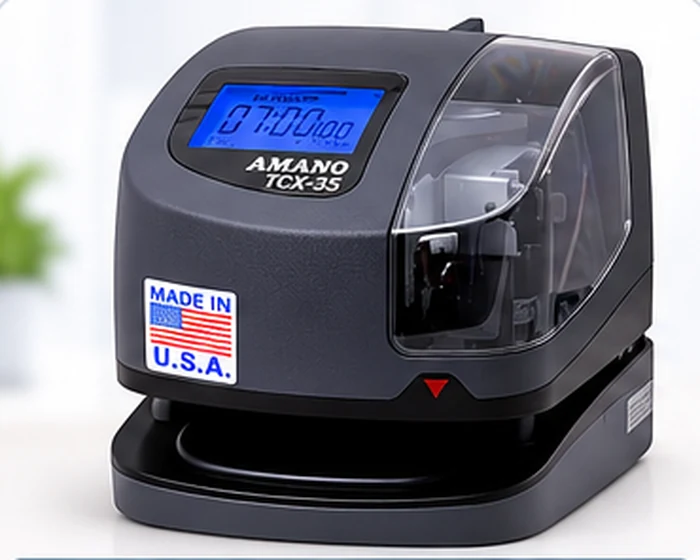
AMANO TCX-35
Printed time records; standalone operation. Check the current manufacturer's specifications before purchasing.
Browse Time Clocks ↗Compare time clocks for employees and small businesses, from traditional punch card machines and automatic calculating time clocks to fingerprint, facial recognition, and cloud-connected attendance systems. Learn how each type works, what it costs to operate, and what to check before buying.
Explore 12 illustrated product examples grouped by their main use. Images are AI-generated visual references, not manufacturer photographs or proof of exact specifications.
Printed time records; standalone operation. Check the current manufacturer's specifications before purchasing.
Browse Time Clocks ↗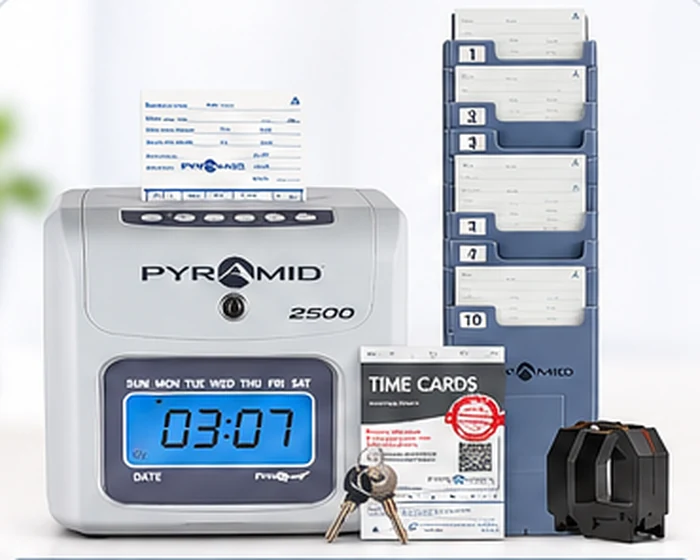
Paper-card time recording with accessory rack. Check the current manufacturer's specifications before purchasing.
Browse Time Clocks ↗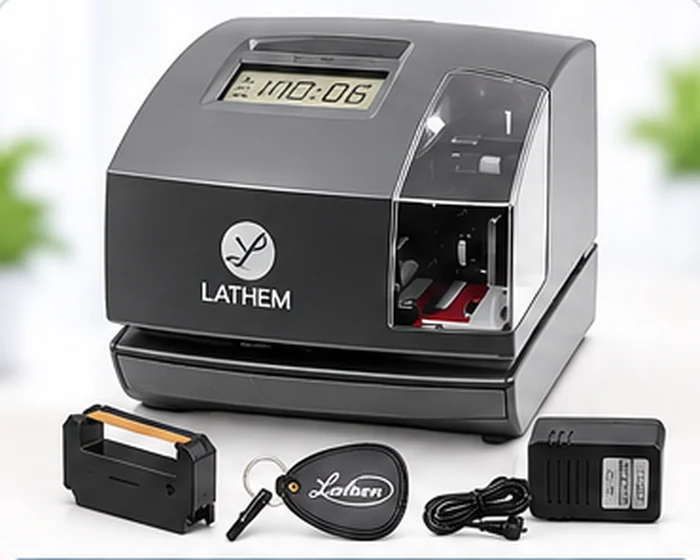
Time and date stamping for office records. Check the current manufacturer's specifications before purchasing.
Browse Time Clocks ↗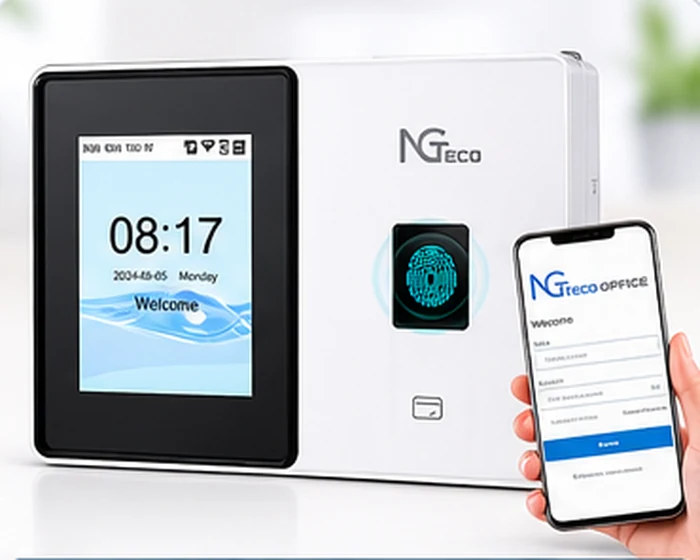
Digital attendance and cloud-oriented reporting. Check the current manufacturer's specifications before purchasing.
Browse Time Clocks ↗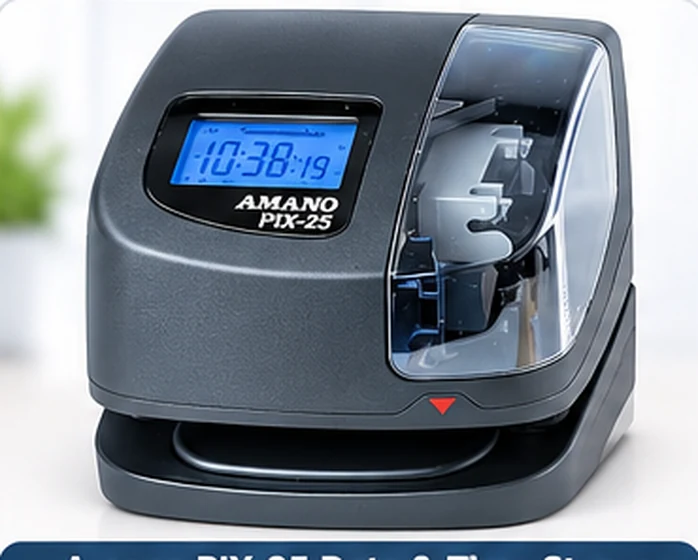
Automatic date and time document stamping. Check the current manufacturer's specifications before purchasing.
Browse Time Clocks ↗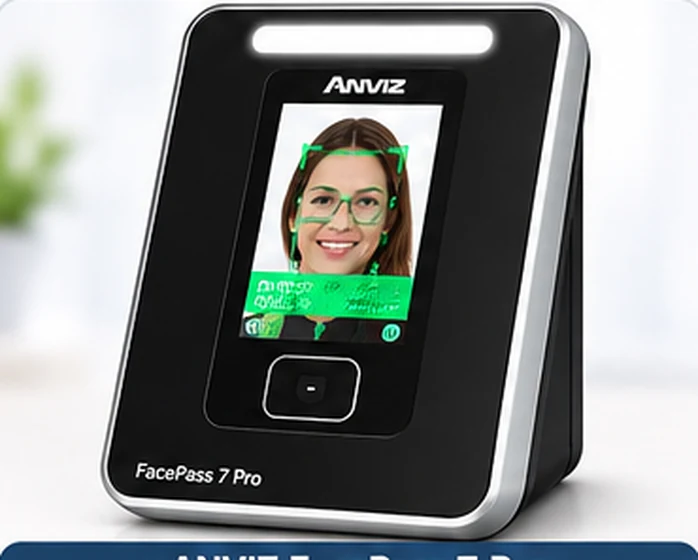
Face-recognition attendance terminal. Check the current manufacturer's specifications before purchasing.
Browse Time Clocks ↗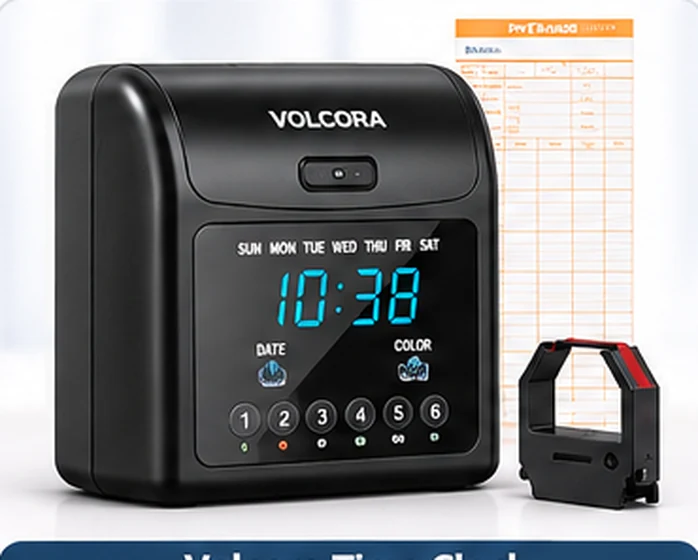
Card-based employee attendance recording. Check the current manufacturer's specifications before purchasing.
Browse Time Clocks ↗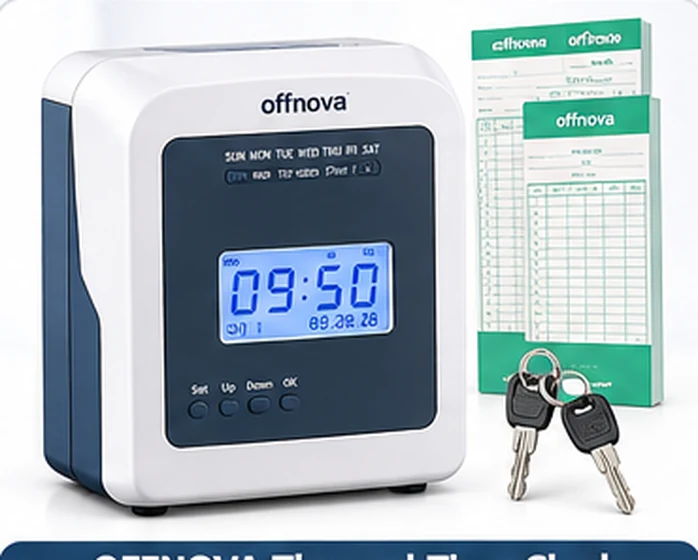
Thermal printing with paper time cards. Check the current manufacturer's specifications before purchasing.
Browse Time Clocks ↗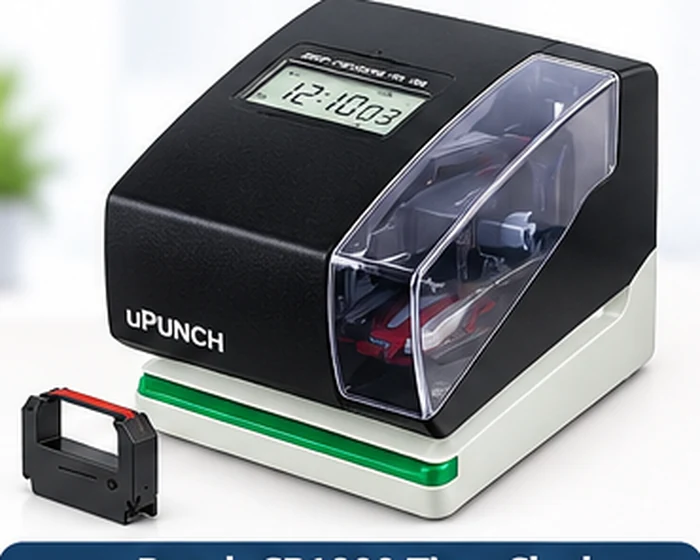
Digital time and date stamp. Check the current manufacturer's specifications before purchasing.
Browse Time Clocks ↗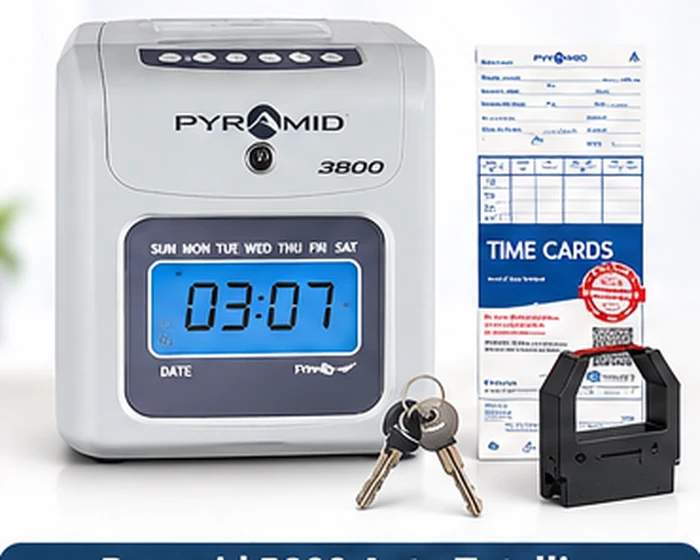
Auto-totaling time card recording. Check the current manufacturer's specifications before purchasing.
Browse Time Clocks ↗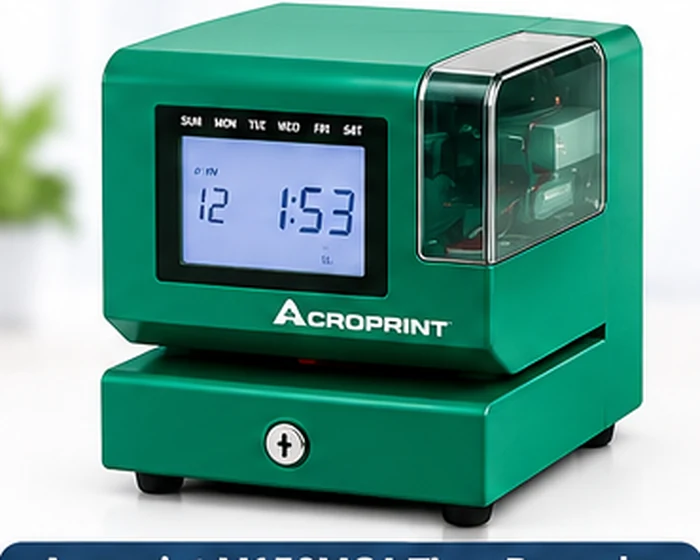
Heavy-duty document time recorder. Check the current manufacturer's specifications before purchasing.
Browse Time Clocks ↗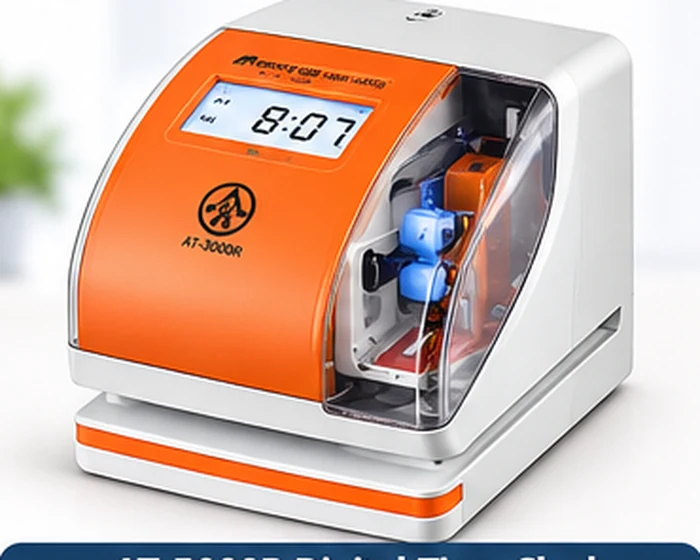
Electronic date and time stamp. Check the current manufacturer's specifications before purchasing.
Browse Time Clocks ↗Some outbound links lead to a retailer. We may earn a commission from qualifying purchases when affiliate tracking is enabled. Read our disclosure.
Employees insert a time card to print a timestamp. Straightforward for fixed-location teams, but payroll totals may require manual work.
Some models total hours directly on the card. Check break deductions, rounding and overtime rules for the exact model.
Fingerprint, face, PIN or badge check-ins can streamline digital records. Review privacy requirements, reporting and ongoing software costs.
A starting-point comparison of common categories. Individual products vary.
| Feature | Punch card | Calculating | Biometric / digital |
|---|---|---|---|
| Typical record | Printed time card | Printed card with totals | Electronic attendance log |
| Consumables | Cards, often ribbons | Cards, often ribbons | Usually fewer paper supplies |
| Payroll preparation | Manual or separate entry | May simplify hour totals | Often exports reports |
| Connectivity | Usually standalone | Usually standalone | Varies by model |
| Considerations | Card handling | Calculation rules | Privacy, subscriptions, backups |
Illustrative selection guide, not a laboratory test or a product ranking. Verify each model's capabilities.
| Model | Category | Best starting use case | Before you buy |
|---|---|---|---|
| AMANO TCX-35 | Card punch | Printed time records; standalone operation | Card and ribbon compatibility |
| Pyramid 2500 | Card punch | Paper-card time recording with accessory rack | Card and ribbon compatibility |
| Lathem 1600E | Document stamp | Time and date stamping for office records | Stamp format and paper handling |
| NGTeco Cloud Time Clock | Biometric | Digital attendance and cloud-oriented reporting | Data handling, network and fees |
| AMANO PIX-25 | Document stamp | Automatic date and time document stamping | Stamp format and paper handling |
| ANVIZ FacePass 7 Pro | Biometric | Face-recognition attendance terminal | Data handling, network and fees |
| Volcora Time Clock | Card punch | Card-based employee attendance recording | Card and ribbon compatibility |
| OFFNOVA Thermal Time Clock | Card punch | Thermal printing with paper time cards | Card and ribbon compatibility |
| uPunch CR1000 | Document stamp | Digital time and date stamp | Stamp format and paper handling |
| Pyramid 3800 | Calculating | Auto-totaling time card recording | Overtime and rounding settings |
| Acroprint M150MC4 | Document stamp | Heavy-duty document time recorder | Stamp format and paper handling |
| Allied AT-3000R | Document stamp | Electronic date and time stamp | Stamp format and paper handling |
Understand the practical details that product listings often leave out.
A step-by-step checklist covering staffing, payroll, setup and running costs.
Read guide →Compare privacy, convenience, cost and the records each system creates.
Read guide →Prepare policies, time cards, shifts and payroll exports before rollout.
Read guide →Understand consumables, subscriptions, software and maintenance.
Read guide →Match the attendance system to your team and workplace.
Read guide →Learn how to total hours, breaks and overtime carefully.
Read guide →A device or system that records when employees start and end shifts. Some systems also calculate hours and export payroll reports.
Many standalone punch-card clocks do not. Cloud-based attendance systems may have recurring fees, while some digital models offer no-fee software. Verify terms before purchase.
Not universally. Digital logs may simplify reporting, while paper cards are simple and often work without a network. Consider privacy obligations and operational needs.
Some calculating clocks and software platforms can, but you must confirm supported pay rules and configure them correctly for your jurisdiction.
A time clock records when a worker starts and finishes a shift. Paper systems print entries onto a time card; electronic systems save them in a digital log. The right choice depends on whether your business needs a simple physical record, automatic hour totals, or payroll-ready exports.
An employee inserts a card, enters a PIN, taps a badge, or uses a supported biometric method. The system records the entry time.
Depending on the model and workplace policy, workers record meal breaks, shift changes, and the end of their workday.
Managers review missing punches and exceptions, then total hours manually or export reports. Always check rounding and overtime rules.
Consider your employee count, shift patterns, card and ribbon costs, available network connection, payroll compatibility, and whether you need mobile or remote check-ins. For biometric time clocks, assess consent, data retention, access control, and applicable privacy law. Standalone clocks can avoid recurring software fees, but may require more manual administration.